Original Sokoban: 1982 Origins, Rules & Modern Variants
The original Sokoban is the compact warehouse puzzle that made one action feel unusually serious: you can push a box, but you normally cannot pull it back. That simple rule turns walking space, corners, corridors, and goal order into the real puzzle.
This guide explains what people mean by original Sokoban, why the 1982 origin matters, how to recognize the classic rule set, and where Zeek the Geek fits. It keeps the historical game separate from modern Sokoban-inspired adventures instead of treating every box-pushing game as the same thing.
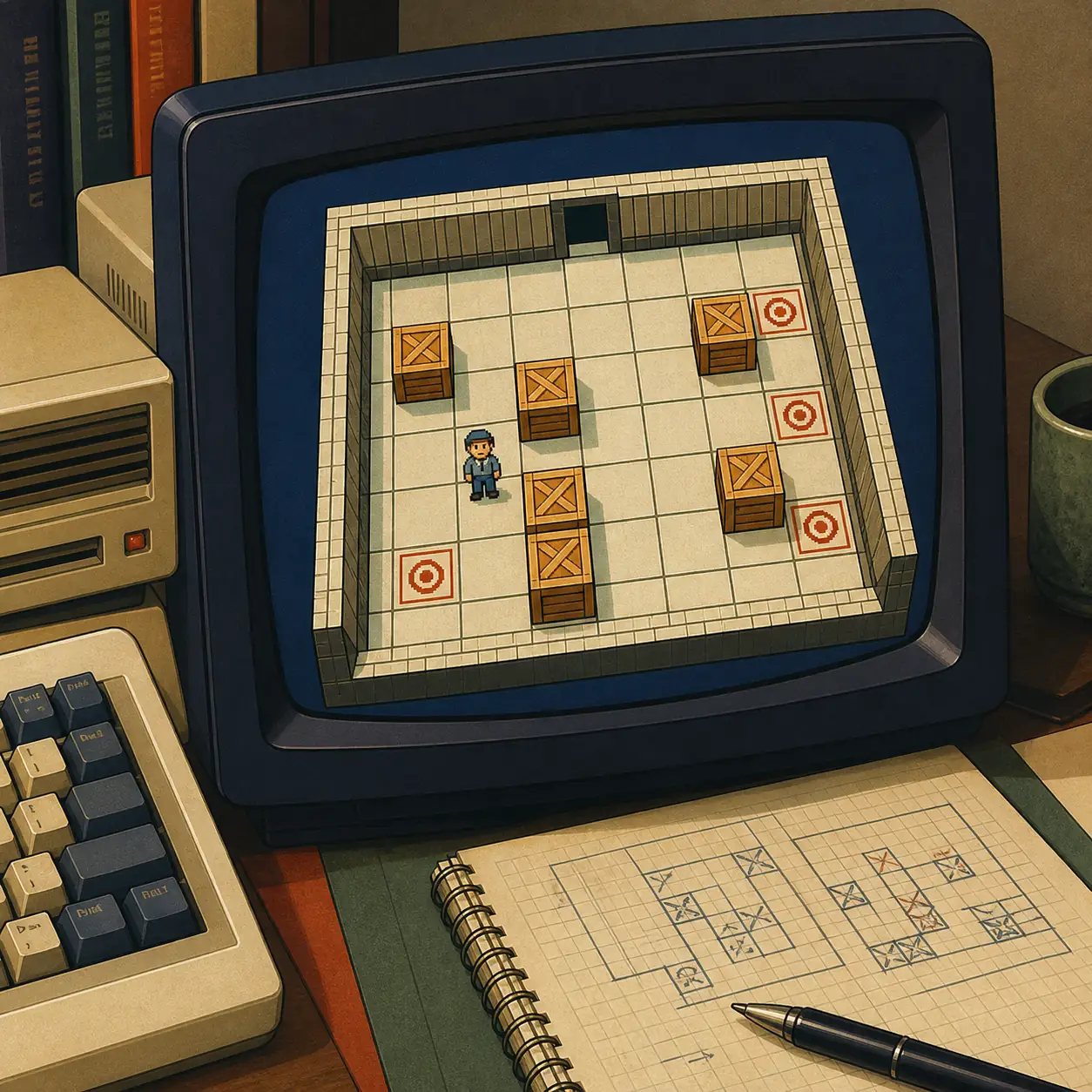
What does “original Sokoban” mean?
“Original Sokoban” is usually a way to distinguish the classic warehouse-keeper design from later variants, browser clones, level packs, and games that borrow only one part of the formula. The original idea is intentionally narrow: a player walks through a grid, pushes boxes into marked destinations, and solves the board by choosing a safe sequence of pushes.
The word Sokoban comes from the Japanese warehouse-keeper name 倉庫番. A modern game may add undo, animated characters, new floor types, or hundreds of community levels and still be recognizably Sokoban-like. Those additions can be useful, but they should not be confused with the original rule contract. The defining pressure comes from irreversible pushes, not from a particular art style or platform.
Why 1982 matters
The original Sokoban is associated with a 1982 release and with the Japanese computer-puzzle tradition. Its lasting contribution was not a large cast of characters or a long story. It was a small ruleset that made a board state easy to understand while making the correct order of actions difficult to discover.
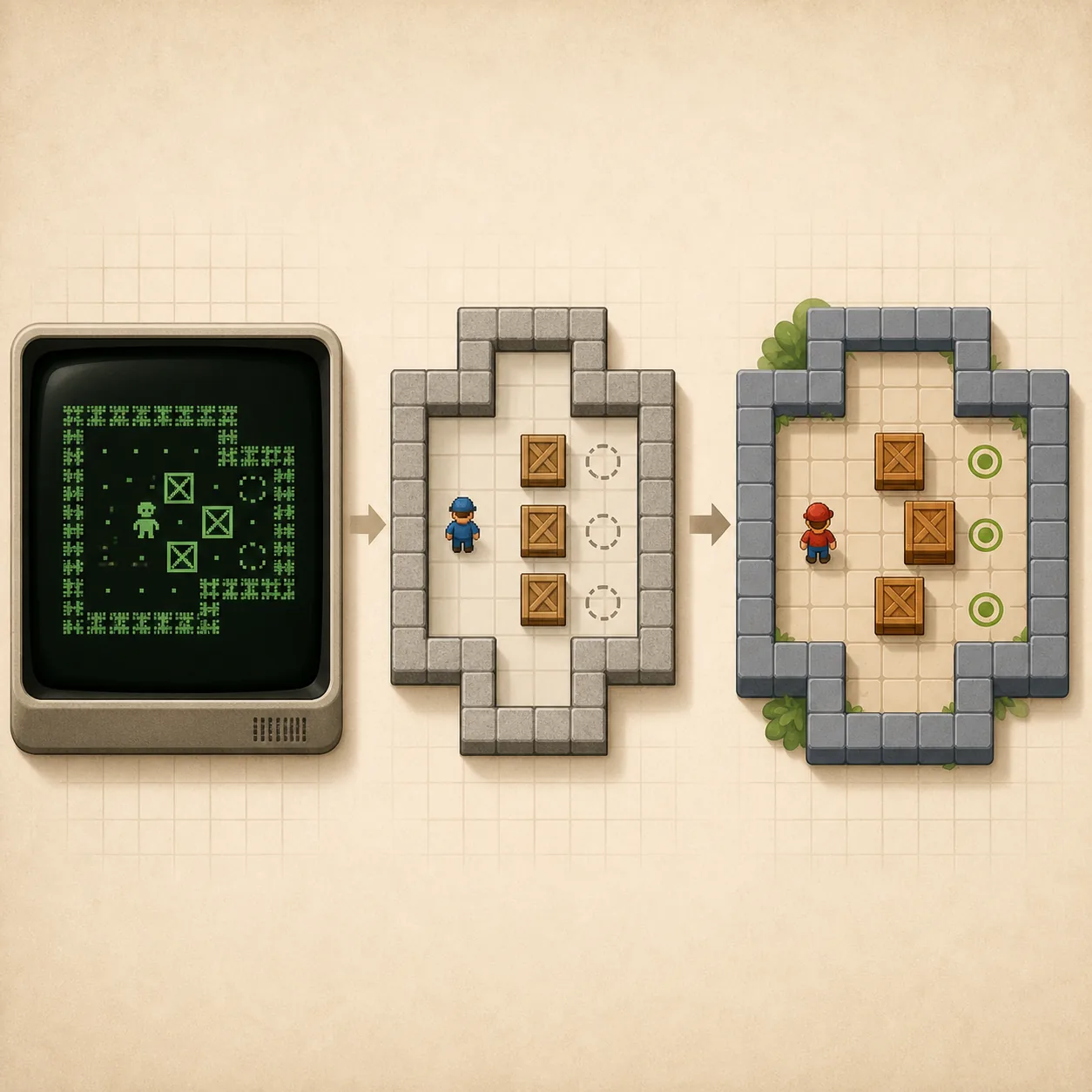
That design also explains why the game remains easy to teach. A player can learn the goal in seconds, then spend much longer understanding why the nearest box is not always the right box. The gap between simple rules and difficult consequences is the historical idea worth carrying into any modern version.
The classic rules that make Sokoban distinct
Different releases may change the artwork, sound, level numbering, or input method. The classic puzzle identity is more stable. These five rules are the useful checklist when a page claims to discuss the original game.
| Rule | What the player can do | Why it changes the puzzle |
|---|---|---|
| Walk | Move through empty floor and around objects. | Walking is usually reversible, so it is mostly preparation. |
| Push | Move one adjacent box into an empty square. | A push changes the state and may remove future access. |
| No pull | Recovering a box from behind is normally impossible. | Corners, walls, and blocked corridors can become permanent deadlocks. |
| Goals | Place every box on a marked goal. | A filled goal can still block a route needed by another box. |
| Restart | Reset the board when the push order is broken. | Recognizing a dead position is part of solving, not wasted time. |
How to read an original-style board
Start with the board’s geometry before moving anything. Mark non-goal corners, one-cell corridors, goals that can only be entered from one direction, and the squares where the player must stand to make a future push. This turns a crowded board into a small set of dependencies.
A non-goal corner is the obvious example. Wall strips and frozen box pairs can be just as dangerous.
Ask which direction the last box must enter each goal, then protect the required approach square.
A nearby goal is not automatically first. Fill the goal that becomes hardest to reach if the route closes.
If a box loses its only useful approach direction, reset before spending more moves on a dead board.
These habits connect the original game to the topics in our Sokoban levels guide and Sokoban explainer, but the focus here is historical: the board stays legible because the rules stay small.
Original Sokoban vs Zeek the Geek
Zeek the Geek belongs beside Sokoban, not inside the original game’s identity. It uses grid movement and irreversible object decisions, so the same planning habits help. But Zeek adds keys, doors, mushrooms, rocks, hazards, collectibles, and route-dependent interactions. The player is solving a broader adventure-puzzle system rather than only parking identical crates on goals.
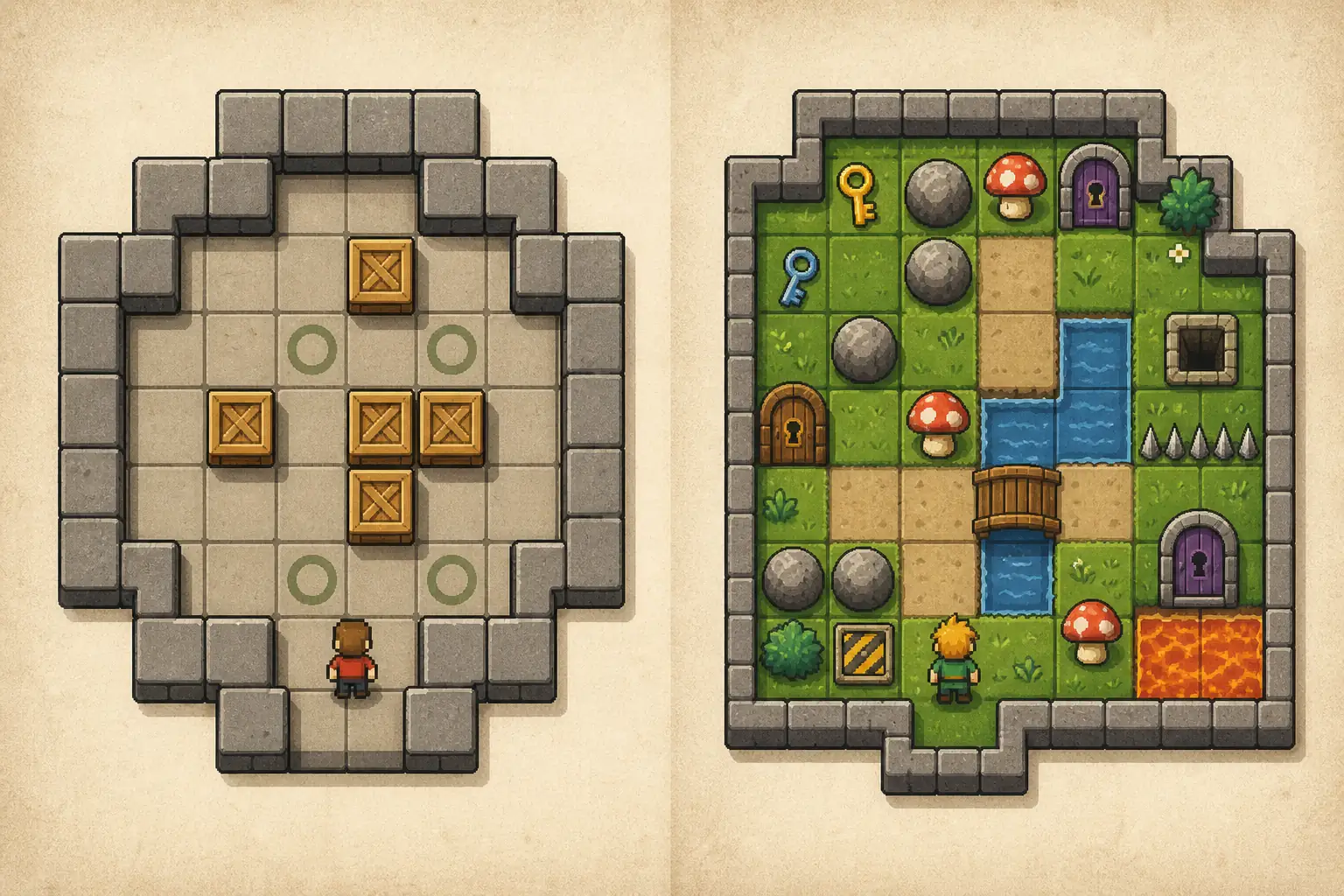
| Question | Original Sokoban | Zeek the Geek |
|---|---|---|
| Main objective | Place boxes on goals. | Reach the objective while sequencing objects and hazards. |
| Irreversible action | Usually a box push. | Pushes plus keys, doors, hazards, and other interactions. |
| What transfers | Protect access squares and avoid deadlocks. | The same habits help, but object rules must also be learned. |
| What does not transfer | No extra object vocabulary is required. | A pure Sokoban solution will not explain every Zeek interaction. |
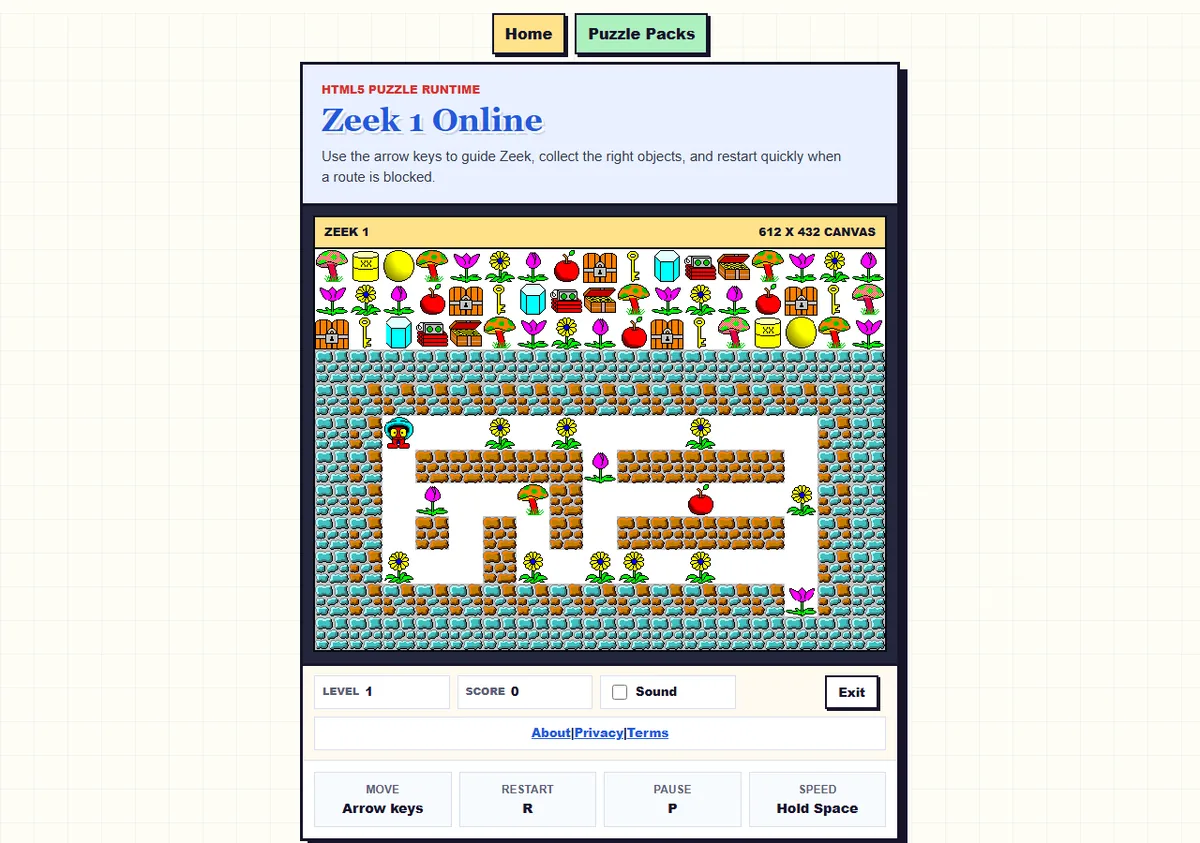
How to play today without confusing versions
If you want the historical context, start with the official Sokoban site and compare its name and history with the practical rule checklist above. If you want to try a related browser puzzle immediately, use our Zeek the Geek online game. The two experiences share deliberate movement, but the second is a fan browser version of a different game.
FAQ
What is the original Sokoban game?
It is the classic warehouse box-pushing design: walk on a grid, push crates, do not pull them, and place every crate on a goal.
When was the original Sokoban made?
The original Sokoban is associated with a 1982 release and the Japanese warehouse-keeper puzzle tradition. Later ports and level collections may use different dates for their own editions.
Is Zeek the Geek the original Sokoban?
No. Zeek is Sokoban-like, but its keys, doors, hazards, collectibles, and other objects give it a broader adventure-puzzle structure.
Can I play an original-style puzzle online?
Yes. You can play Zeek in the browser on this site. Use the official Sokoban site for historical context rather than treating the Zeek page as an original-game archive.
Why can’t Sokoban boxes be pulled?
The no-pulling rule makes each push consequential. It forces you to preserve approach squares and makes a wrong corner more serious than a long walking detour.
Sources checked
Official Sokoban site for the Japanese name and historical context · Sokoban history and rules overview for a secondary reference.
Try the ideas on a real board
Read the whole board first, protect the next standing square, and restart when a push has removed the only safe route.
Play Zeek the Geek online Open the walkthrough